

Quiz template · Education · Updated
Weather quiz questions and answers
20 questions on clouds, hurricanes, the jet stream, lightning, fog, weather balloons and the hottest place on Earth, with answers and sources.

A weather round for a geography or science class, a homework check or a family quiz night in a storm. It covers the instruments and the scales first, then the big systems: hurricanes and typhoons, the jet stream, El Nino and the Coriolis effect. The last five reach for record temperatures, the wettest place on Earth and how to tell how far away a lightning strike is. Every answer is checked against two sources, most of them national weather services. Twenty questions take about 15 minutes.
An anemometer, often a set of spinning cups on a mast, measures what?Easy
- Wind speed
, the right answer - Rainfall
- Hours of sunshine
- Cloud height
Answer: A. Wind speed. The cups catch the wind and spin faster as it strengthens. The name comes from anemos, the Greek word for wind.
- Wind speed
Which tall, towering cloud brings thunderstorms?Easy
- Cirrus
- Stratus
- Cumulonimbus
, the right answer - Altocumulus
Answer: C. Cumulonimbus. A cumulonimbus can climb over 12 kilometres and flatten into an anvil shape at the top. Cirrus clouds are the thin wisps high up, and stratus is the grey sheet.
Hurricanes get their energy from what?Easy
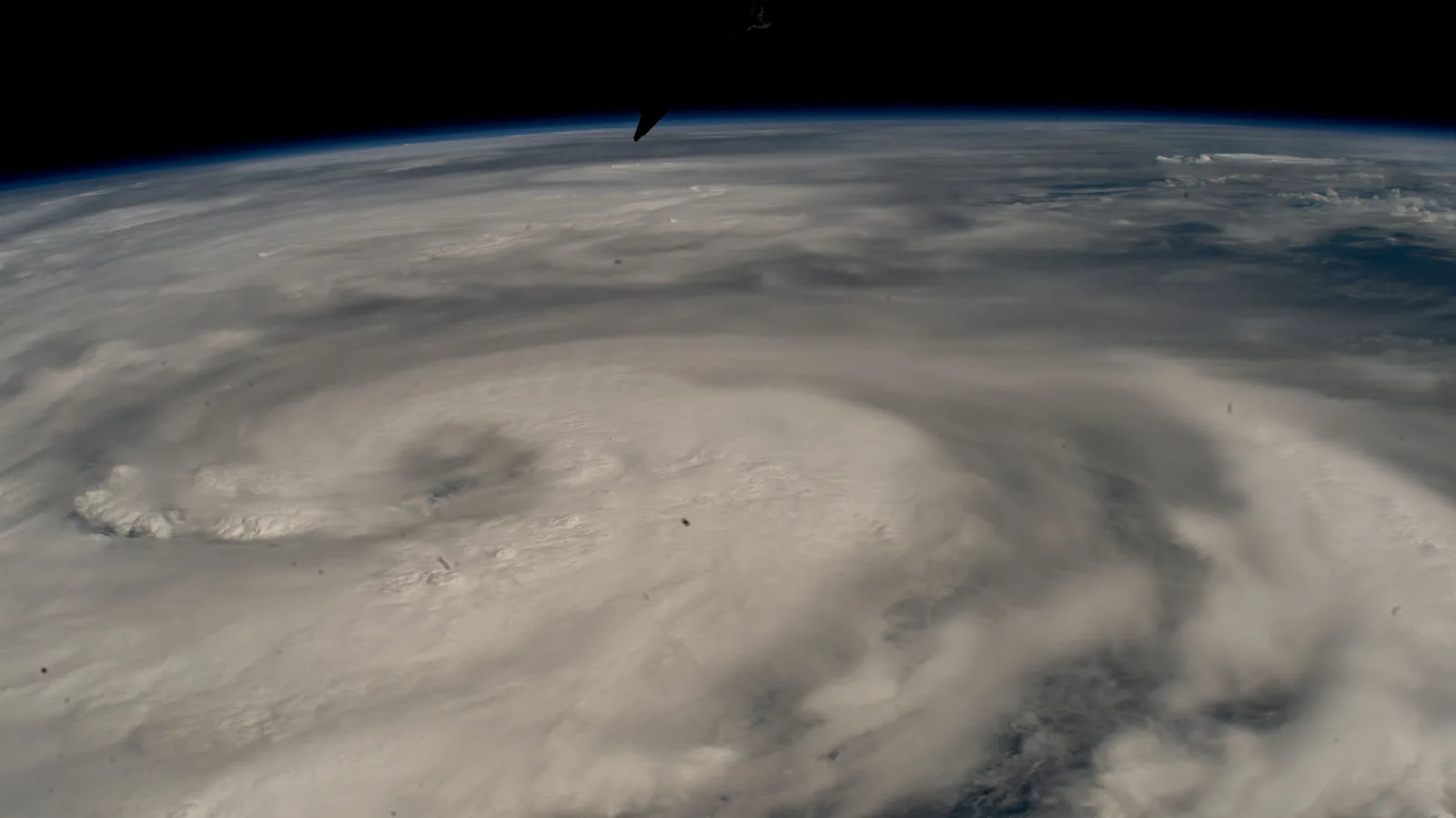
- Warm ocean water
, the right answer - Melting mountain snow
- Desert sand
- Heat from cities
Answer: A. Warm ocean water. A hurricane needs sea surface temperatures of at least 26.5 degrees Celsius. The warm water evaporates, rises and releases heat as it condenses into clouds.
- Warm ocean water
In the northwest Pacific, near Japan and the Philippines, a storm with hurricane strength is called a what?Easy
- Tornado
- Typhoon
, the right answer - Derecho
- Haboob
Answer: B. Typhoon. Hurricane, typhoon and cyclone are the same kind of storm with different regional names. In the Indian Ocean and the South Pacific it is a cyclone.
The Beaufort scale, which runs from 0 to 12, describes what?Easy
- Air pressure
- Snow depth
- Humidity
- Wind strength
, the right answer
Answer: D. Wind strength. Francis Beaufort, a Royal Navy officer, drew it up in 1805. Force 0 is calm and force 12 is a hurricane, and each step describes what the wind does to the sea or to trees.
Nearly all weather happens in the lowest layer of the atmosphere. What is that layer called?Medium
- Stratosphere
- Troposphere
, the right answer - Mesosphere
- Thermosphere
Answer: B. Troposphere. The troposphere reaches about 6 kilometres up at the poles and about 18 at the equator. The stratosphere above it holds the ozone layer.
A tornado's strength is rated after the event on which scale?Medium
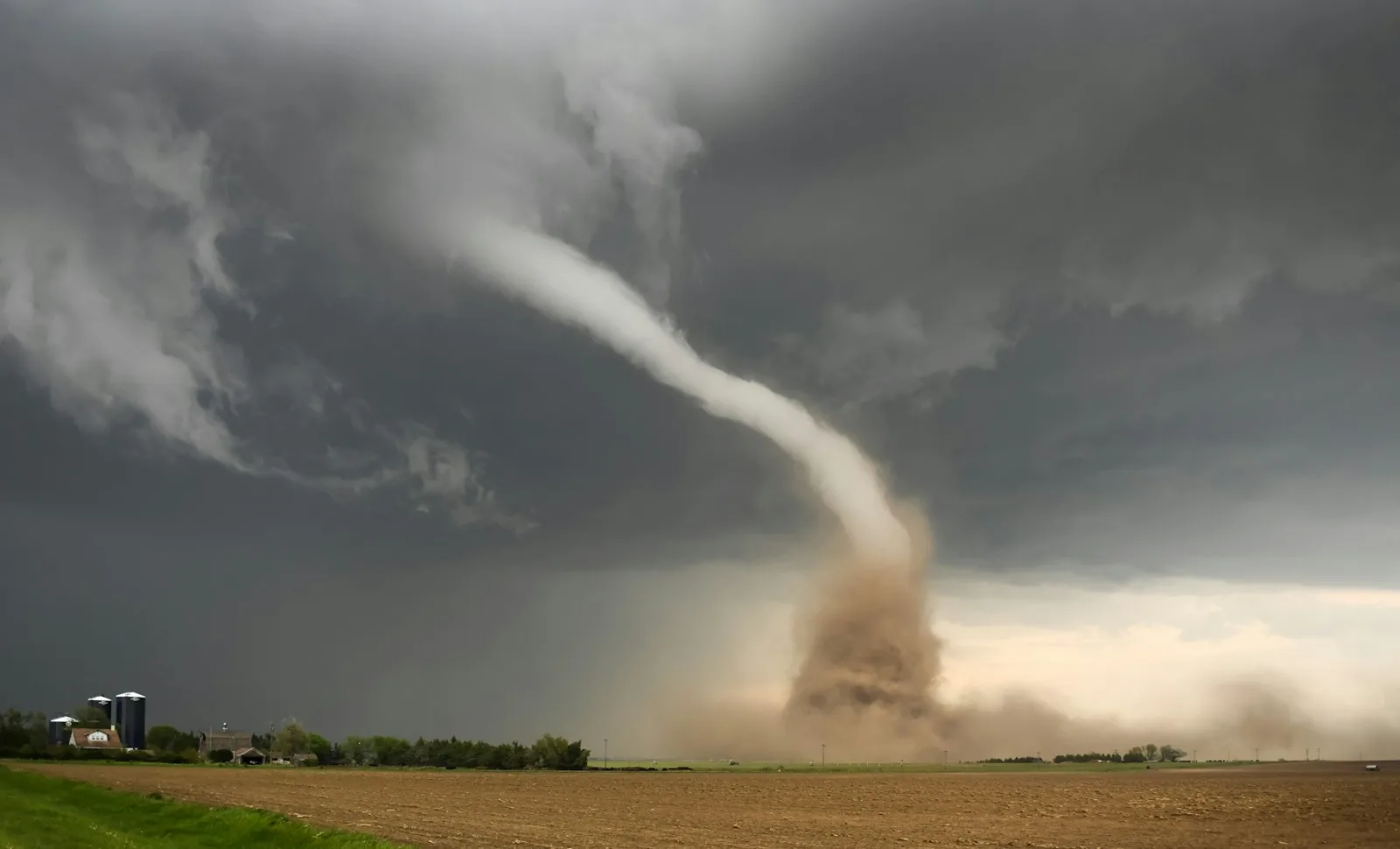
- Richter scale
- Saffir-Simpson scale
- Enhanced Fujita scale
, the right answer - Mohs scale
Answer: C. Enhanced Fujita scale. It runs from EF0 to EF5 and is based on the damage left behind, because the winds inside a tornado are almost never measured directly. Saffir-Simpson is the hurricane scale.
The fast, narrow band of wind high in the atmosphere that steers weather systems around the planet is called the what?Medium
- Jet stream
, the right answer - Trade wind
- Sea breeze
- Gulf Stream
Answer: A. Jet stream. Jet streams blow from west to east at speeds that can pass 320 kilometres an hour. Airlines ride them eastbound to save fuel and time.
- Jet stream
The temperature the air must cool to before water vapour starts condensing into droplets is called the what?Medium
- Boiling point
- Freezing point
- Dew point
, the right answer - Melting point
Answer: C. Dew point. The closer the dew point is to the air temperature, the stickier the air feels to you. A dew point above 20 degrees Celsius is what most people call muggy.
El Nino, which shifts rainfall and temperatures around the world, is a warming of the surface of which ocean?Medium
- Atlantic
- Indian
- Arctic
- Pacific
, the right answer
Answer: D. Pacific. It happens in the tropical Pacific every two to seven years. Its cooler opposite is La Nina, and Peruvian fishermen named the warm phase after the Christ child because it peaked near Christmas.
True or false: a lightning bolt is hotter than the surface of the Sun.Easy
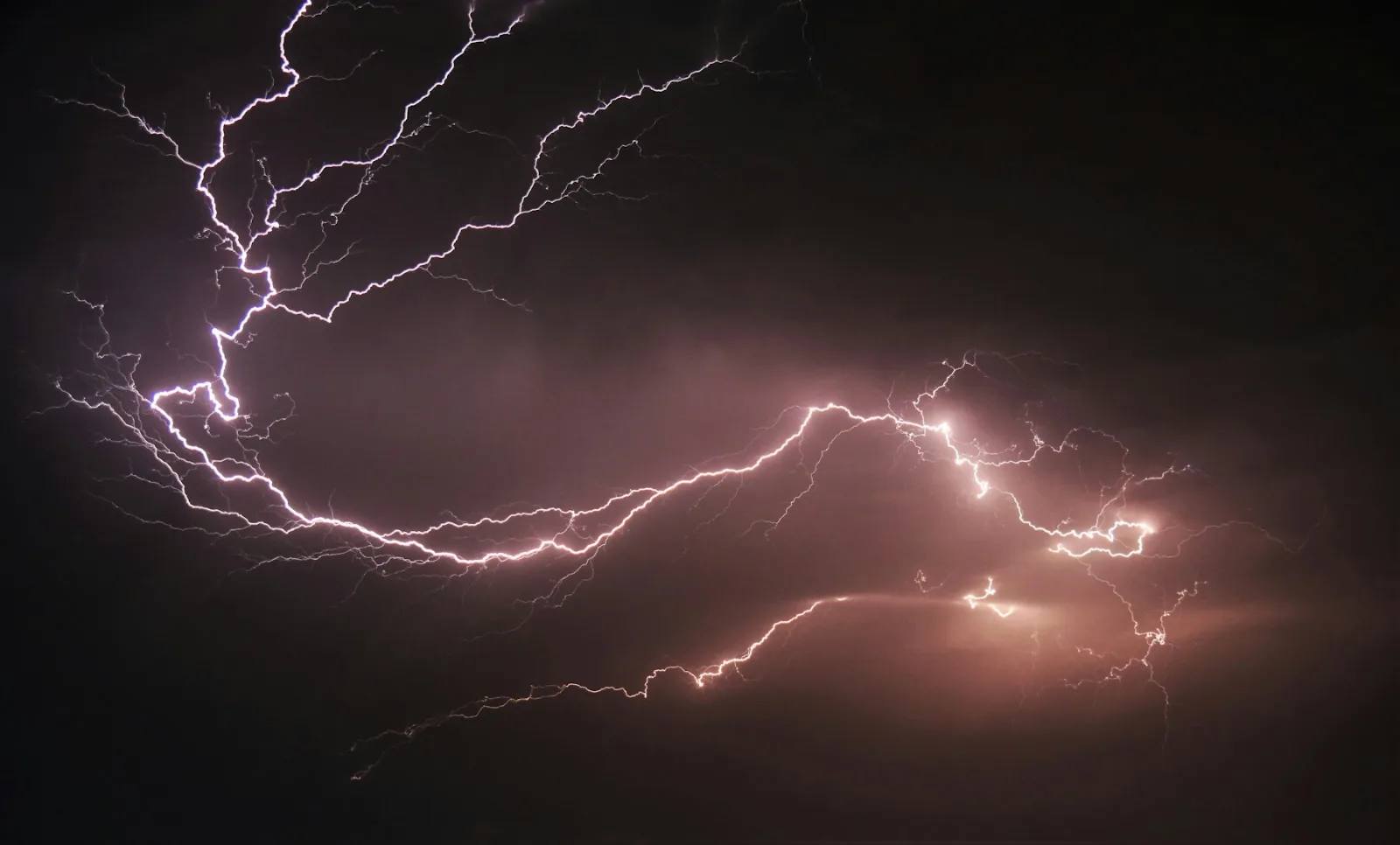
- True
, the right answer - False
Answer: A. True. Lightning heats the air around it to about 30,000 degrees Celsius, roughly five times the temperature of the Sun's surface. The sudden expansion of that air is the thunder you hear.
- True
Very fine rain made of droplets under half a millimetre across is called what?Easy
- Sleet
- Drizzle
, the right answer - Hail
- Snow
Answer: B. Drizzle. Drizzle usually falls from low stratus cloud and can hang in the air for a long time. Raindrops are bigger, and sleet and hail are frozen.
What is fog?Medium

- Smoke trapped near the ground
- A cloud at ground level
, the right answer - Steam rising off the sea
- Dust blown in from the desert
Answer: B. A cloud at ground level. Fog forms when air near the ground cools to its dew point and the water vapour condenses. Forecasters call it fog when you can see less than 1 kilometre, and mist when you can see further.
Weather services launch balloons twice a day from hundreds of sites around the world. What instrument hangs under each one?Medium
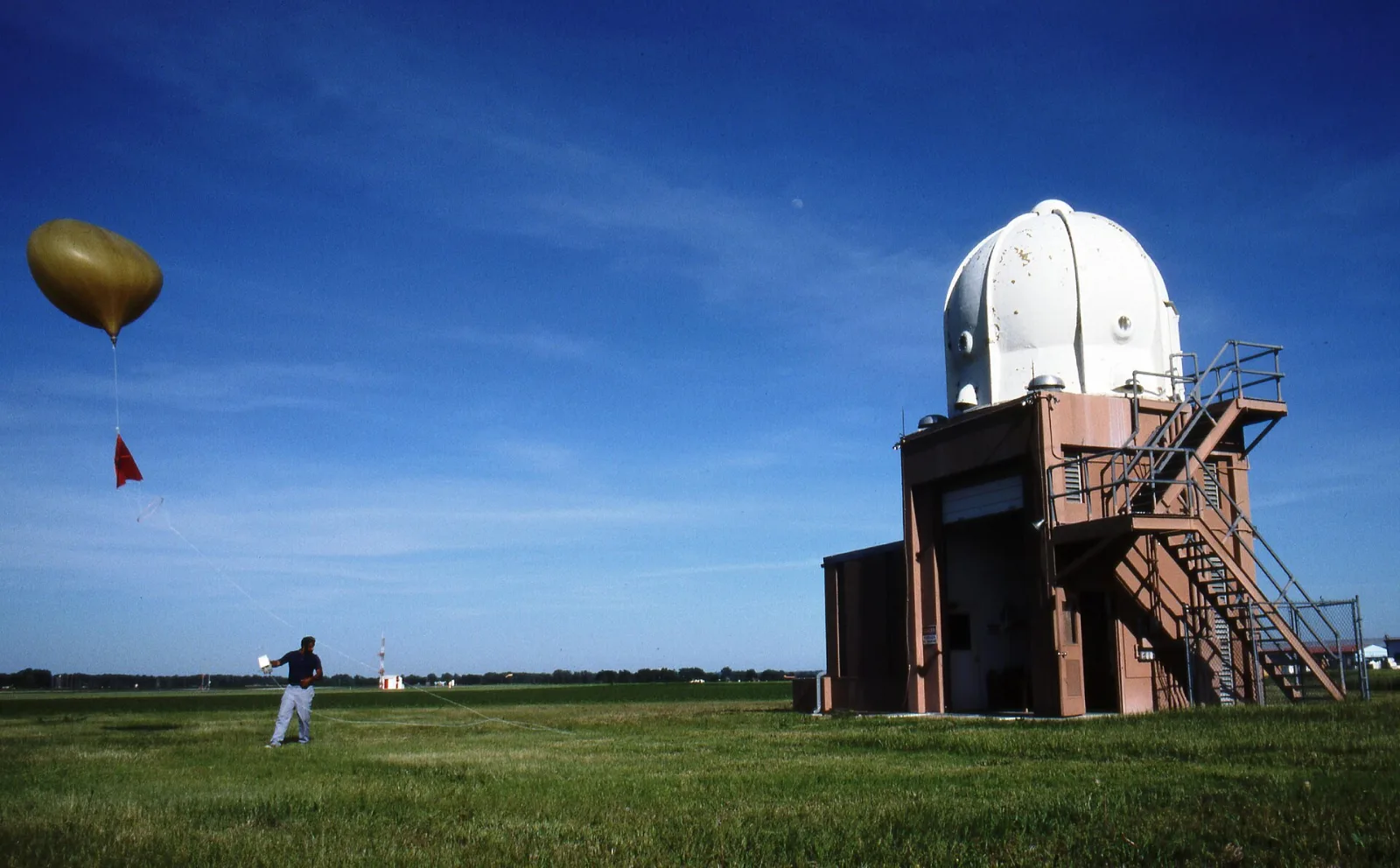
- A seismograph
- A sextant
- A Geiger counter
- A radiosonde
, the right answer
Answer: D. A radiosonde. The radiosonde radios back temperature, humidity and pressure as it climbs to 30 kilometres or more, where the balloon bursts and a small parachute brings it down.
The highest air temperature ever reliably recorded, 56.7 degrees Celsius (134 Fahrenheit) in 1913, was measured where?Hard
- Death Valley, United States
, the right answer - Timbuktu, Mali
- Alice Springs, Australia
- Kuwait City, Kuwait
Answer: A. Death Valley, United States. The reading was taken at Furnace Creek on 10 July 1913. The World Meteorological Organization still lists it as the record, though some scientists doubt the old thermometer.
- Death Valley, United States
Mawsynram, often called the wettest place on Earth, with close to 12 metres of rain in an average year, is in which country?Hard
- Brazil
- Indonesia
- India
, the right answer - Colombia
Answer: C. India. It sits in the Khasi Hills of Meghalaya, where moist monsoon air from the Bay of Bengal is forced up over the hills. Most of the rain falls between June and September.
Because of the Coriolis effect, hurricanes in the Northern Hemisphere spin in which direction when seen from above?Hard
- Clockwise
- Anticlockwise
, the right answer - Both, switching each day
- They do not spin
Answer: B. Anticlockwise. Earth's rotation bends moving air to the right north of the equator and to the left south of it, so cyclones south of the equator turn clockwise. It is far too weak to affect a draining sink.
True or false: a meteorologist studies meteors.Easy
- True
- False
, the right answer
Answer: B. False. A meteorologist studies the weather. The name goes back to Aristotle, whose book Meteorology covered anything suspended in or falling from the sky, shooting stars and rain alike.
A pale ring sometimes appears around the Sun or the Moon. What bends the light to make it?Medium
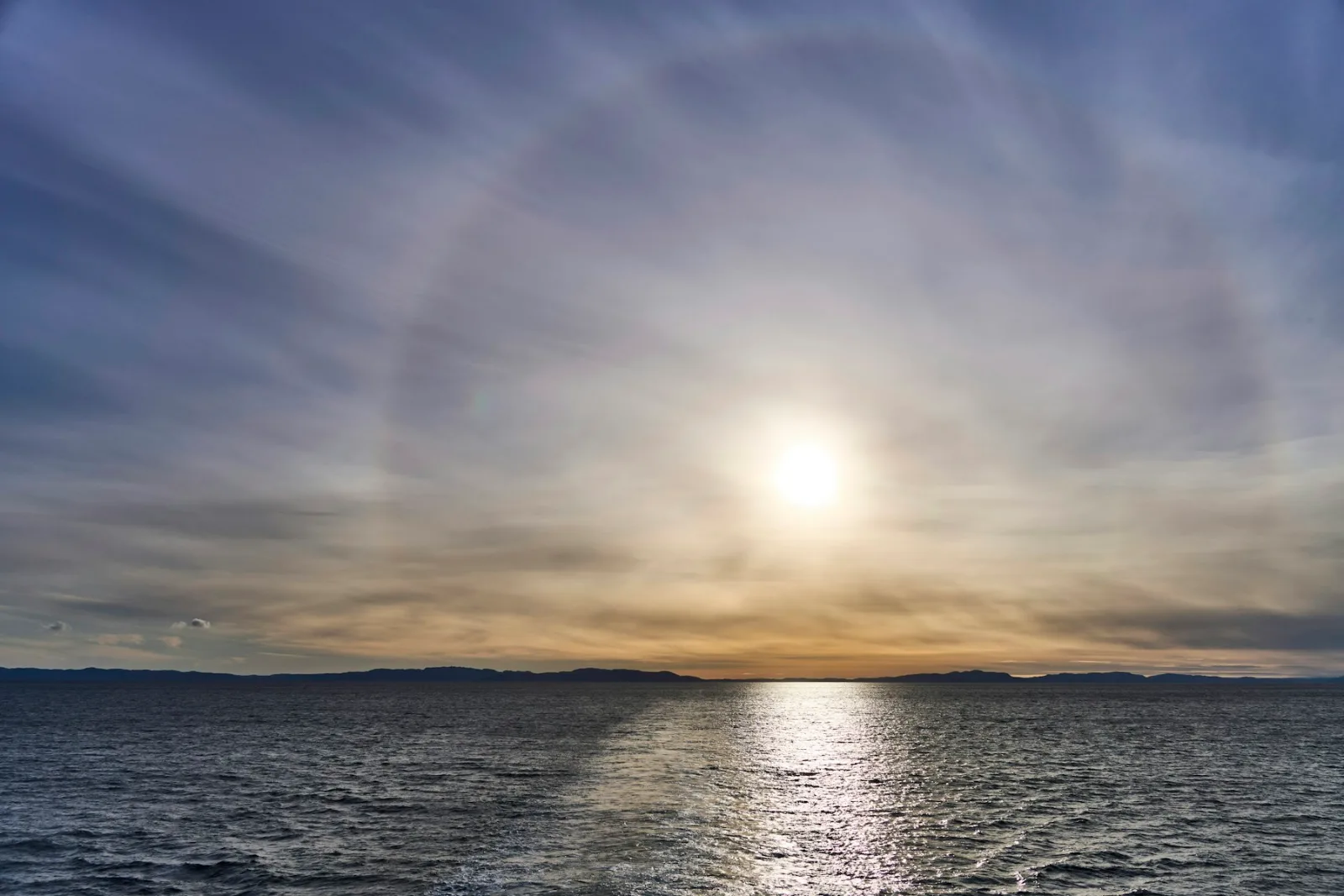
- Ice crystals in high cloud
, the right answer - Smoke from volcanoes
- Salt spray from the sea
- Pollen in the air
Answer: A. Ice crystals in high cloud. The ring is a 22 degree halo, made by light passing through the tiny six-sided ice crystals of cirrus cloud. Because cirrus often arrives ahead of a front, folklore says a halo means rain is coming.
- Ice crystals in high cloud
Sound travels about 1 mile every 5 seconds. If you count 15 seconds between a lightning flash and its thunder, roughly how far away was the strike?Hard
- About 1 mile (1.6 km)
- About 3 miles (5 km)
, the right answer - About 15 miles (24 km)
- About 30 miles (48 km)
Answer: B. About 3 miles (5 km). The flash reaches you almost at once, so the gap is all thunder travel time. Forecasters say that if you can hear thunder at all, the storm is close enough to strike you.
That's all 20. Host it live and everyone answers on their phone, with a leaderboard after each question.
How to run it
- Run it at the end of a weather unit. The speed bonus starts off, so a careful answer beats a fast guess.
- After question 14, the weather balloon, show the class today's forecast chart and ask where the data comes from. It leads straight into radiosondes and satellites.
- Question 20 is a calculation about lightning and thunder, so give it the full timer and read the answer out loud. It is the one fact students take home.
Questions about this template
What age group is this weather quiz for?
The first fifteen suit students from about age 11 upwards: cloud types, wind scales, hurricanes and typhoons, fog and the jet stream. The last five are harder, with world records and a calculation, so they stretch older students and work for adults too. Every answer is checked against two sources, most of them national weather services.
How do I play it with a class?
Press Go live and show the PIN or QR code on the board. Students answer on a phone or tablet in the browser and the leaderboard shows after each question. The free plan covers 100 players in a session.
Do students need an account or an app?
No. They open the link or scan the code, type the PIN and a name, and play in the browser. Only the host needs a RiLiFi account.
Can I change the questions to match my syllabus?
Yes. Use this template to make a copy, then edit any question, add local weather records or remove the ones your class has not covered.
Sources
Every answer shown here was checked against two sources. 38 pages on 9 sites, links last checked 19 November 2026.
- en.wikipedia.org19
- forecast.weather.gov4
- weather.metoffice.gov.uk4
- oceanservice.noaa.gov3
- weather.gov3
- noaa.gov2
- guinnessworldrecords.com
- nesdis.noaa.gov
- nps.gov
All 38 source pages
- Anemometer - Wikipediaen.wikipedia.org
- NOAA's National Weather Service - Glossaryforecast.weather.gov
- Cumulonimbus cloud - Wikipediaen.wikipedia.org
- Low level clouds - Met Officeweather.metoffice.gov.uk
- Tropical cyclone - Wikipediaen.wikipedia.org
- How do hurricanes form?oceanservice.noaa.gov
- What is the difference between a hurricane and a typhoon?oceanservice.noaa.gov
- Beaufort scale - Wikipediaen.wikipedia.org
- Beaufort wind force scale - Met Officeweather.metoffice.gov.uk
- Troposphere - Wikipediaen.wikipedia.org
- Layers of the Atmosphere | National Oceanic and Atmospheric Administrationnoaa.gov
- Enhanced Fujita scale - Wikipediaen.wikipedia.org
- The Enhanced Fujita Scale (EF Scale)weather.gov
- Jet stream - Wikipediaen.wikipedia.org
- The Jet Stream | National Oceanic and Atmospheric Administrationnoaa.gov
- Dew point - Wikipediaen.wikipedia.org
- NOAA's National Weather Service - Glossaryforecast.weather.gov
- El Niño-Southern Oscillation - Wikipediaen.wikipedia.org
- What are El Nino and La Nina?oceanservice.noaa.gov
- Lightning - Wikipediaen.wikipedia.org
- Understanding Lightning: Thunderweather.gov
- Drizzle - Wikipediaen.wikipedia.org
- NOAA's National Weather Service - Glossaryforecast.weather.gov
- Fog - Wikipediaen.wikipedia.org
- What is fog? - Met Officeweather.metoffice.gov.uk
- Radiosonde - Wikipediaen.wikipedia.org
- Radiosonde Observationweather.gov
- Highest temperature recorded on Earth - Wikipediaen.wikipedia.org
- Weather - Death Valley National Park (U.S. National Park Service)nps.gov
- Mawsynram - Wikipediaen.wikipedia.org
- Happy Independence Day: Our Top 10 records from India | Guinness World Recordsguinnessworldrecords.com
- Coriolis force - Wikipediaen.wikipedia.org
- What Is the Coriolis Effect? | NESDIS | National Environmental Satellite, Data, and Information Servicenesdis.noaa.gov
- Meteorology - Wikipediaen.wikipedia.org
- NOAA's National Weather Service - Glossaryforecast.weather.gov
- 22° halo - Wikipediaen.wikipedia.org
- Optical effects: nature's light show - Met Officeweather.metoffice.gov.uk
- Thunder - Wikipediaen.wikipedia.org
Picture credits
- A huge swirling storm with a cloud-filled centre photographed from orbit above the curve of the Earth, by NASA (International Space Station crew, Expedition 72)Public domain
- A white funnel reaches down from dark storm clouds and kicks up brown dust over flat farmland, by Greg JohnsonUnsplash License
- Branching bolts of lightning spread across a dark night sky, by Rafael GarcinUnsplash License
- An empty road with an orange centre line disappears into thick grey mist between bare trees, by Brendan ChurchUnsplash License
- A large balloon rises over a grassy field with a small instrument package and parachute hanging below it, by Stephen Corfidi, NOAA/NWS/SPC (NOAA Photo Library)Public domain
- A large faint ring of light surrounds the low sun in a hazy sky above a calm sea, by Wolfgang HasselmannUnsplash License
More templates


Start free
Run it live with your group.
Players join from their phones with a PIN. No app to install, free for up to 100 participants per session.